Evaluate AI on the work your team needs to finish
A practical path from a model shortlist to an enterprise adoption decision, with a baseline, representative tasks and cost per accepted result.
- Published
- Written by
- Forward Intelligence
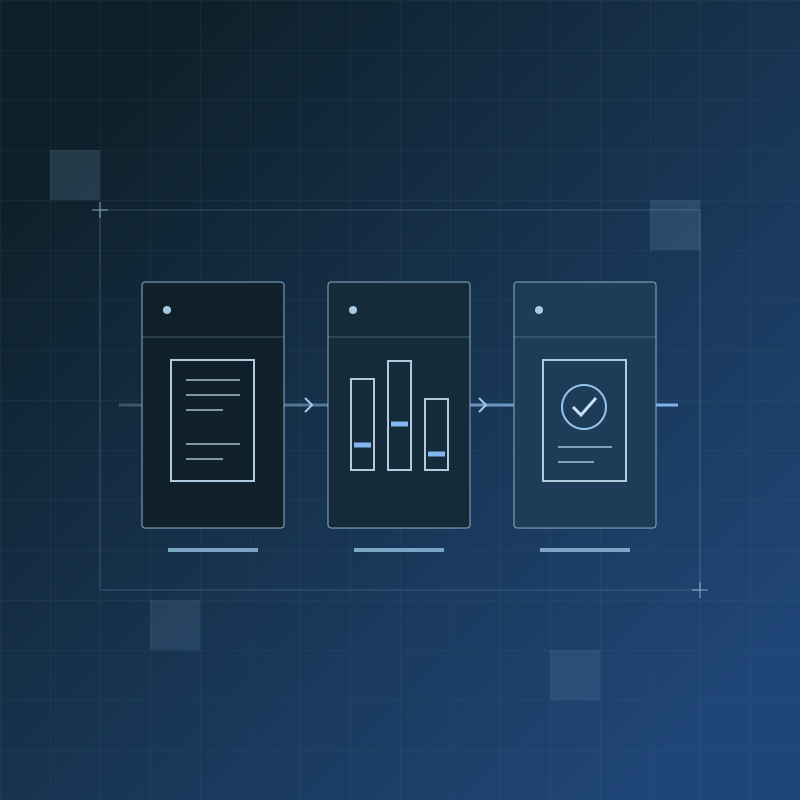
A useful model is part of a useful workflow. Enterprise teams also need the right sources, reliable integrations, a review process and a cost they can explain. Those requirements belong in the evaluation from the beginning.
Start with a unit of work: a reviewed document, an accepted answer, a completed service task or a code change that passes review. Define what makes that unit acceptable. Then compare candidate models against the way your team works today.
A baseline makes the comparison meaningful#
Record the current result, volume, completion time, exceptions and review effort. If the baseline is still unknown, make establishing it part of the pilot. Without it, a new model's outputs may look impressive while leaving the operational decision unanswered.
Use representative inputs and a consistent rubric. Include ordinary work and the cases that trigger errors or human handoff. Keep the sample size and evaluation period beside the results. A pilot on one task set does not establish performance across an industry.
Shortlist models, then test the workflow#
Published capabilities, context and token prices help narrow the candidates. Use the Grid catalog to build a shortlist and compare the same example workload. Confirm the model IDs enabled for your account and the limits of the deployment you will evaluate.
Give every candidate the same task, tools and review rules. Pin the model and configuration so the comparison can be reproduced. Record attempts and failures, not only the final successful response.
For document work, inspect required fields and source traceability. For knowledge, judge whether the answer is correct, grounded in authorized sources and useful to the person asking. For service, inspect the action, exceptions and handoff. For engineering, inspect tests, correctness and reviewer effort. Each organization sets its own acceptance thresholds.
Training is an evaluation decision too#
Training starts with a desired behavior and a dataset or reward. Choose how your team will work: a custom engagement, a Training API loop or a managed method. Confirm checkpoint and method eligibility before treating a published model as a supported training job.
Keep held-out evaluation examples separate from training data. Compare the current model and the trained artifact on the same set, including required behavior that must continue to work. Agree on the artifact and serving plan before promoting it into production.
Explore the training paths or research the RL options.
Count the cost of accepted work#
Input, cached input and output prices explain consumption. The operational comparison also needs retries, tool calls, integration, review and any reserved capacity. Separate one-time delivery costs from recurring operation.
Define the boundary before calculating:
cost per accepted result = total cost inside the agreed boundary / accepted results
If no outputs are accepted, the evaluation has not produced a useful unit cost. Report the failure and its cause. A lower price per token can still lead to more rework or more attempts; measure the complete task inside your chosen boundary.
The pricing calculator supplies an indicative token estimate. The proposal records effective rates, inclusions, deployment and operating responsibilities.
Make the expansion decision explicit#
Name the acceptance owner, thresholds and the limited rollout scope. Agree how exceptions are handled and when the result will be reviewed again. Security, procurement and operations need to understand the same deployment that the evaluation used.
Use the evaluation guide and downloadable brief to prepare the conversation. Explore the enterprise journey, workflow examples and trust review to connect the pilot with the engagement your team needs.